


Author Archive
Interview and Query Critique CONTEST with Entangled Publishing Editor, Kerry Vail!
by Stacey O'Neale on Nov.01, 2012, under Contests & Giveaways, Publishing
 Kerry holds a BA in English with a minor in Classical Studies from NC State University. She has extensive freelance editing experience, and teaches various fiction writing classes at a local college. She’s an Associate Editor with Entangled Publishing, and is Managing Editor of the Covet line, Entangled’s paranormal contemporary line. In addition to editing, Kerry writes science fiction, romantic fantasy, and paranormal romance. In her free time, she is a costumer, artist, cat collector, and guitarist. Kerry loves the whole spectrum of speculative fiction, from hard scifi to space opera to sociological. She loves dystopian futures and alternate histories, especially when combined with a compelling voice and an unusual twist. She also enjoys urban fantasy, high fantasy, and paranormal thrillers, and gravitates toward strong female leads who are intelligent and can save themselves and fall in love. She is open to stories of love in any of its many forms and any heat level.
Interview:
1. What is the best part of being an editor with Entangled Publishing?
Working directly with authors is my absolute favorite thing about working at Entangled. I love “talking shop” about books, ideas, and writer-ly things. Editing can be lonely work—so any chance I get to interact with the authors I am editing with, I cherish.
2. What’s something coming out now/soon that you’ve edited and are excited about?
To be fair, I love every single book I’ve worked on. At Entangled, we don’t edit a book we don’t love. To be able to be the best editor possible, you really need to care about the manuscript. Otherwise, editing is just a job—and what is the fun of that?
3. What are the primary mistakes you see writers make in the query process?
I am shocked by the number of queries that come in that don’t pay attention to the submission guidelines posted on the Entangled website. No, we don’t accept children’s picture books, or books about such-and-such banned topic—no matter how well you think it is written. Sure, we want the shiny new and exciting things, but we don’t want things that make us go ick. *Please* follow the guidelines.
4. With partial requests, what makes you stop reading and start skimming-or stop reading altogether?
For me, if I don’t love the main character pretty quickly, the manuscript doesn’t really stand a chance. I am fairly patient with excessive narrative, backstory, and even grammatical mistakes—but if the hero/heroine are boring, why read?
5. Can you tell us about your role in EP’s new category line, Covet?
Covet is Entangled’s new paranormal contemporary shorter romance line. I am Managing Editor, which means I help schedule things and work with authors on their paperwork—things like gathering an author bio, professional photo, blurbs, etc.
6. The Covet line is currently open to submissions. Can you tell us what you’re seeing a lot of and what you’d like to see more of?
We’ve seen many vampire stories come through submissions—and that is a good thing! We love a unique twist on Mr. Dracula, so keep sending those vamp stories. And I’d love to see more mythological creatures, more witches, more fairies—and more humor.
7. Will you be at any upcoming writers conferences where people can meet/pitch you?
Let’s see. I plan to be at RWA Nationals, RT, and hopefully AAD. I will also be at the Rocky Mountain Fiction Writers’ Conference. That is all I have planned at the moment.
8. I noticed you’re pretty active on your twitter account. Are you a fan of social media for aspiring writers?
Absolutely! Both Twitter and Facebook, when used wisely, are great tools for authors. You can meet other authors and publishing professionals and share info—the latest and greatest blogs, books you love, and new releases and acquisitions.
9. Best piece(s) of advice we haven’t discussed?
Don’t compare yourself to other writers. You are unique. Make time to do your own thing every single day. Write on!
Contest Details:
One person will receive a query critique from Entangled editor, Kerry Vail. Editors make acquisitions for Entangled, so if she’s interested, she’s in a position to buy manuscripts! The contest will run from November 1st - November 30th.

Cyber-Bullying in the Book Community
by Stacey O'Neale on Oct.10, 2012, under Publishing, Writing Tips
I have to be honest and say I never imagined I’d ever write about cyber-bullying in the book world. Books have always been an escape for me. Back in 2004, I was diagnosed with lupus and began a two year period where I was in severe chronic pain. I nearly lost my career, my home, and even my life. The one bit of entertainment I had during those years was reading. For a period of time, I had a distraction from my own personal nightmare. I could pick up a book and join in on someone else’s adventures or travel to fantastical worlds. I can’t say books saved my life, but I can say they saved my sanity. I am fortunate I have a great team of doctors who eventually found a medicine regimen that allows me to live a semi-normal life, but I never gave up on my love of books. That love, eventually became a love of writing and changed my life for the better.
That’s why I have such deep adoration for books and the wonderful creative people who write them. What I have learned from my own practices is that book writing requires you to take a piece of your soul and pour it over the pages. It’s a deeply personal experience and scary as hell when you imagine putting yourself out there for all the world to judge. It is to be expected that not everyone will love what you have created, but it’s wrong when the criticism leads to personal attacks against the author. Calling an author names, making fun of their work or other readers who enjoy their books is not a representation of freedom of speech – it’s cyber-bullying. Creating a website or tumblr account with the sole purpose of humiliating an author is not acceptable, yet it seems to be happening more and more.
There is no difference between making degrading statements online against a classmate and making them against an author you don’t like. We are all people and we should learn to be more tolerant of one another. We should support the book community by creating websites about books and authors we love. We should encourage others to pick up a book and read. Take the passion you feel and turn it into something positive that helps others. And, most importantly, be kind to one another.
October is Bullying Prevention Month and I am one of many taking a stand on this issue. Here’s a few links you may also want to check out:
The Mortal Institute | Mortal Instruments News in Spanish | Captured Moments in Time | Ex Libris
Stacey O’Neale is a writer, book blogger, and a senior publicist with Entangled Publishing. She has participated in panels for Book Expo America and teaches courses through Savvy Authors. Beyond her websites and speaking engagements, you can find her on Goodreads, Twitter, and Facebook.
Interview with Literary Agent Pooja Menon
by Stacey O'Neale on Oct.05, 2012, under Contests & Giveaways, Literary Agent Interviews
 Pooja Menon joined Kimberley Cameron & Associates as an intern in the fall of 2011, with the aim of immersing herself in the elusive world of books and publishing. She soon realized that being an agent was what she was most drawn to as the job was varied and challenging. She represents both fiction and non-fiction for Adult and YA markets.
1) What is the best part of being a literary agent?
I love everything about being an agent. My favorite part, though, is the process of discovering manuscripts in my inbox that make my heart slow down considerably. When I find myself savoring each word in a manuscript, that is when I know I’ve got to represent that particular book and author. I also love the process of editing. It’s like putting together a puzzle, and making sure the right chapters and scenes go in the right places, in a way that makes the book even stronger. Being a chronic reader, this profession allows me to think, breathe, and talk about books to people who are equally obsessed with the publishing world. That is a truly enjoyable experience. Makes me thankful for each day!
2) How would you summarize your personal agenting philosophy? What do you expect from an agent-author relationship?
There are four things that are very important for a successful agent-author relationship–communication, trust, respect, and honesty. As an agent, I envision my relationships with my authors to be long-term ones. I want to represent them for the entirety of their career, if possible. Which means, the author and I should be able to communicate, right from the beginning, what the both of us expect from each other. I would also like for us to have an interactive relationship where she feels comfortable calling or emailing me whenever needed, without any reservations. In terms of being an agent, I am the kind of person who will not hold back in terms of editing and revisions. Sometimes, this might be hard for the author to accept. I understand this. But as a third person, she needs to trust that I will be able to help her by giving her a reader’s perspective. She should know that the only reason I’m representing her is because I LOVE her work and want to get it into the best shape possible, so that I can get it into the hands of the right people. People who will appreciate her work as much as I do.
On the author’s side, I would expect her to be aware of what is going on around her, in the world and in the publishing scene. I would like her to have an inexhaustible well of future ideas that are current or prolific. She needs to be a social media junkie, to be actively building her platform (fiction or non-fiction), and to be writing every day. This is extremely important in today’s publishing climate, to build a base of followers or friends within which to promote your body of work, and to hone your craft. I would also expect us to have a mutually respectful relationship where we can bring our thoughts, feelings, ideas, and opinions to the table, knowing that we’re in a partnership, and it’s okay to have disagreements sometimes. In the end, I will be the fiercest advocate for her work.
3) What’s something coming out now/soon that you’ve represented and are excited about?
Since I’m a new agent (about two months new), I’m still in the process of searching for the right projects and building my client list. I was an intern/assistant for the past ten months before I became an agent, so I’ve been honing my editorial skills by helping Kimberley and Liz with their projects. Now I’m ready to find my own. As of now, I’m excited about two women’s fiction projects and one memoir that have come across my lap. If things go well, I should be able to begin shopping them out soon.
4) What are the primary mistakes you see writers make in the query process?
Going through all that effort to create the perfect query letter, synopsis, and sample chapters…then sending it to the wrong agent. Writers should research widely and make a list of agents that deal specifically with their genres before sending their query letters out. They’ll have a lesser chance of getting rejected.
5) Your agency website says that you’re interested in young adult, can you tell us what you’re seeing a lot of and what you’re not seeing enough of? (Your “dream projects, so to speak.)
I see a lot of YA crowded with vampires, werewolves, faeries, demons, and lately, psychics. These days, it’s not just enough to be in possession of a well-written manuscript. You have to ask yourself how your book is different to the countless others that saturate the market. There needs to be a whole fresh angle that hasn’t been done before. In terms of what I’d love to see more of in YA, stories with edgy new concepts and flawed but lovable characters would be it. I’m open to YA in ALL genres. But there has to be something different about them for me to get really hooked. That would be my dream project.
6) When accepting fantasy, what subgenres do you lean toward?
That’s a difficult question. In general, I’m looking for a good story. It can be in any genre. Contemporary, historical, fantasy, steampunk, urban fantasy, adventure, dystopian, romance, paranormal romance, historical fantasy…are there any subgenres I’ve missed? I prefer not to lean towards anything, as I do not want to restrict myself.
7) Will you be at any upcoming writers conferences where people can meet/pitch you?
I’ll be attending the TMCC Writers’ Conference in Reno, which is on the 27th of April. I expect to add some more to the list as the months go by. But for now, Reno it is!
8) Is a writing platform important for unpublished writers? Does it weigh in on your decision to represent? Are you a fan of social media?
Yes and no. I think it certainly helps if a writer has some writing credentials to his name. Their queries are looked at with an extra layer of curiosity when we see that they’ve been published in journals and literary magazines prior to querying us. That being said, if the writing is strong, credentials and platform will be the last thing on our minds. However, in the case of non-fiction, platform is detrimental. Editors at publishing houses do not consider proposals without a solid platform. So, unless the non-fiction query is extremely zoned into what is going to be HOT in the market in the next two years, and is superbly written, I may decide to pass up on it. As for whether I’m a fan of social media, since I started at KC&A, I’ve begun to be stricter about keeping up a blog and twitter account, because it’s the easiest way to reach out to writers and people in the publishing community. Therefore, it’s become very important to be adept at social media, to keep up with the changing technological trends.
9) Best piece (s) of advice we haven’t discussed?
One, read a lot. Read across all genres. This builds up your vocabulary and keeps you current on what’s hot in the market. Two, write everyday. Doesn’t matter what you write—it could be journaling, writing outlines to possible stories, poems, lists of ideas—keep that hand moving. Third, when writing and polishing your manuscript, be consistent with the entire book. Most often, I see that the first fifty pages of a manuscript are tight, clean, and well written. But after the fifty-page mark, things start to slide downhill.
Contest Details:
One person will receive a query critique from literary agent, Pooja Menon. The contest will run from October 5th - October 31st.

How to Enter:
My Critique from the Pitch On Contest – LOSING IT by Lauren McKellar
by Stacey O'Neale on Oct.04, 2012, under Contests & Giveaways

Name: Lauren McKellar
Email: HIDDEN
Title: LOSING IT
Genre: Contemporary YA
Word Count: 46,000
17 year-old Amy is abandoned by her rock star father and sent to live in a country town. Drinking, partying, and falling for the wrong guy sees Amy spin from depression to self-destruct mode, as her dangerous habits spiral out of control.
When faced with a friend’s overdose, Amy can no longer hide from her past; she has to stop losing herself and face her future before it’s too late.
My Two Cents:
This sounds like it could be really good and deeply emotional. I would give it a read for sure! The major issue I see is the word count. Most guidelines state that a contemporary YA must be above 55,000 words. This could cause you to be rejected even before someone reads your query. The other issue is I’m not reading much in terms of a plot. What happens to Amy because of all the self-destructive behavior? Is the friends death her fault? I’m not seeing your story structure.
I played with the wording a bit and this is what I came up with:
After being abandoned by her rock star father, seventeen-year-old Amy is sent to live (with who?). Her depression and self-loathing quickly lead to drinking, partying, and falling for the wrong guy. A friend’s overdose forces her to confront her past and change her future before it’s too late.
Good luck!!!
Stacey O’Neale is a writer, book blogger, and a senior publicist with Entangled Publishing. She has participated in panels for Book Expo America and teaches courses through Savvy Authors. Beyond her websites and speaking engagements, you can find her on Goodreads, Twitter, and Facebook.
My Critique from the Pitch On Contest – VEILED by Katherine Ernst and Chelle Bruhn
by Stacey O'Neale on Oct.01, 2012, under Contests & Giveaways
Names: Katherine Ernst and Chelle Bruhn
Email: Hidden
Country of residence: United States
Title: VEILED
Genre: YA Science Fiction
Word-count: 87,000
Pitch: When her sister kills herself to avoid an arranged marriage Aveza knows it’s because, in their world, women are genetically predisposed to take on the personality desired by their husbands, and Linza would rather die than be attached to someone so revolting. Now Aveza is promised to him in her sister’s place, and she has two options: flee the only home she’s ever known or follow Linza into the grave.
My Two Cents:
Well, I can tell you I’m already intrigued and I love the title. I would give this a read for sure.
With that said, I would suggest you elaborate more on this world and why women are forced into this procedure. Also, how does this personality change take place? Is it a chip or a pill or a surgery? The idea is very interesting, and in my opinion, the most appealing/unique aspect of your pitch. If you needed to, I would take out the sister’s portion. The idea that Aveza is heading into an arranged marriage with someone she detests in really enough explanation. I tried to shorten your text to give you more room to explain it.
Shortened Word Pitch: After her sister kills herself to avoid an arranged marriage with a revolting man, Aveza is chosen to take her place. She refuses to accept the procedure which will shift her personality into what’s most appealing to her future husband and is ultimately left with two options: flee the only home she’s ever known or follow Linza to the grave.
Good luck!!!
Stacey O’Neale is a writer, book blogger, and a senior publicist with Entangled Publishing. She has participated in panels for Book Expo America and teaches courses through Savvy Authors. Beyond her websites and speaking engagements, you can find her on Goodreads, Twitter, and Facebook.
Looking for Writers with Blogs to JUDGE the Pitch On Contest!
by Stacey O'Neale on Sep.20, 2012, under Contests & Giveaways
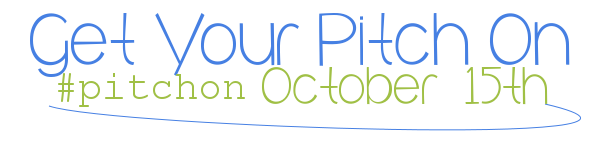
It’s not long to go now until Get Your Pitch On details are revealed. Yah!
Get Your Pitch On is a chance for YA writers to pitch to an editor! She has told me that she’s looking for YA in any genre and the writer can be based anywhere in the world.
Right now I’m looking for more bloggers to host workshops prior to the contest opening. Here’s what’s involved:
- Workshops run from October 1 until the contest opens 15 October.
- Take on 5 to 10 pitches on your blog - pitches are to be between 50 – 70 words.
- Each pitch needs to be a separate post to allow for feedback in the comments.
- Provide feedback on improving the pitch and encourage other people to provide feedback.
It’s up to the host blogs if they want additional requirements, such as writers much be a follower of the host blog to be part of the workshop.
The blogs that have signed up so far include:
- Sarah Nicolas
- Peculiar Light
- Stephanie Diaz
- Marieke Nijkamp
- Zap’s Lobster Tank
- Leigh Ann Kopans
- Gina’s Writer’s Blog
- Finding Joy in the Journey
- Jamie Grey
- Maggie Hall
- Howdy Girl
- The Sleepless Writers
- The Write Words
- Of Cabbages and Kings
- Stacey Nash
- Kaitlin Adams
- Sharon.L.Norris
- Ellie Writes 2
- Larissa’s World
- 2000 Words
- Ink in the Book
- Stacey O’Neale
The competition will have a maximum for 100 entries per blog over Down Under Wonderings and YAtopia – so 200 in total. Which means we need lots of blogs to be involved to help writers hone their entries.
You can host a workshop and still enter the competition. So if you’re interested, go to the contacts page on my website and shoot me an email or add your details in the comments (blog and email).

Get Your YA Pitch On Pre-Competition Details!!!
by Stacey O'Neale on Sep.18, 2012, under Contests & Giveaways

Here’s the details you’ve been waiting for!
Commissioning and Managing Editor of Hardie Grant Egmont, Marisa Pintado, will be poised and ready to take your pitches both here on Down Under Wonderings and on my group blog YAtopia on October 15th.
Marisa is looking for YA in any genre and is accepting submissions from any where in the world. It’s your chance to skip the slush pile and put your pitch right under the nose of a fantastic editor. There’s even better news – there is no limit on how many requests Marisa will make from the contest.
Here’s the rules:
- Your manuscript must be complete, polished and ready to query – this means no first drafts or almost finished manuscripts.
- It must be YA.
- When the contest goes live on October 15th, post your entry details in the comments section of either YAtopia or Down Under Wonderings – each blog is accepting 100 entries only.
- Your entry detail needs to include a 50 – 70 word pitch.
- You can enter more than once if you have more than one complete, polished, ready to query manuscript.
Your contest details should be formatted like this:
Name: Sharon Johnston
Email: smjohnston [ @ ] live.com.au
Country of residence: Australia
Title: SLEEPER
Genre: Speculative Fiction
Word-count: 58,000
Pitch: Seventeen-year-old Mishca Richardson is a sleeper soldier with a weak heart. She has no idea that a life saving heart transplant has accidentally triggered her programming. In the search for answers, she discovers the truth and that her creator, Wirth, has classified her remaining “sisters” from her experiment group as defective, scheduling them for termination. Mishca sets out to save them before they’re eliminated.
Just as it’s important to get someone else to look over your manuscript before you query, it’s a good idea to get feedback on your pitch before you post. We have about twenty blogs who are ready to help you hone your pitch. These workshops start on October 1 and you can find the list of blogs participating here.
I’m so excited to bring this competition. So now it’s time for you to Get Your Pitch On!
VLOG: Writing, Contests, and my current OBSESSION with Gena Showalter and The Walking Dead!!!
by Stacey O'Neale on Sep.10, 2012, under Contests & Giveaways
Book Piracy – An Insiders Perspective
by Stacey O'Neale on Sep.05, 2012, under Publishing

Many authors have expressed their feelings on the intellectual theft known as book piracy, but I’m going to try to take my post in a different direction.
Every action has a reaction as they say. What effects publishers and authors does also affect readers. Before you can understand the truth about piracy, you first have to understand publishing. I’m going to offer you a crash course on the basics.
When an author sells a book, the majority get paid an advance ranging from $0 – $100,000. Most authors fall somewhere in the lower end range of $0 – $25,000. Does that sound like a lot of money? Not if you consider it takes the average author six months to write a book and the majority only publish one book a year. Could you live off of $25,000 (and don’t forget about the taxes which reduce that amount roughly by 30%)? That means an author needs to make money on the back-end with royalties (a percentage of each book sold). Well, authors only get royalties after they’ve paid back their advance, and most don’t. Perhaps now you can understand why every book sale is important to an author.
Still, I haven’t really talked about how this affects you, so let’s get into the down and dirty. With the poor economy and bookstore closures, publishers are limiting deals to non-celebrity authors. Instead of buying a planned series, in many cases, they buy the first book only and see what happens. So, if a book is downloaded several thousand times (which are pretty standard numbers), it could mean the publisher is never able to break even on the book. That means, they reject the rest of the series and you never get to see how it ends. A character you’ve grown to love and cheer for is now gone. Of course, the rest of the series could get picked up by another publisher, but who wants to invest in a failed series? Would you buy a broken bungee cord? Not likely.
But you reviewed the book you downloaded which draws attention to the book and author, right? That’s a sweet thought, but a million reviews won’t save a book that isn’t selling. It’s all about money people – it always is.
Now, why should you care how a publisher is affected? They’re all billion dollar companies making money hand-over-fist, right? Nope.
When a book is published, a publishing house has a number of expenses to pay beyond what the author gets to publish a book. They have to pay editors, publicists, book cover artists, and advertisers just to name a few. All of those expenses combined must be recouped for a book to be considered a success. That means every book published starts out in the red as a debt. Now, you’re probably thinking I haven’t mentioned sales to chains such as Barnes & Noble which would put us back in the green with a profit, right? Wrong. Any book that doesn’t sell in a bookstore, in most cases, can be returned to the publisher for a full refund. So, putting a book in a bookstore doesn’t mean it’s going to make a profit for a publisher/distributor.
So what happens when publishers don’t make money? Well, exactly what you’ve seen in the news which is massive layoffs and pay cuts. And do you think it’s the big executives feeling the pain? Nope, it’s the people like me and you just trying to get by; the average Joe’s. The employees lucky enough to keep their jobs are left overwhelmed with work because they have to keep their departments functioning even though they are now understaffed. Perhaps edits get rushed and the book isn’t as good as it could’ve been had they had more time to spend with an individual author. We’ll never know I suppose, but it is a possibility.
Are you still arguing the facts? Maybe you don’t see the difference between getting a book at the library and downloading for free. The difference is the libraries paid for those books. They get special government grants for this purpose. And, if you haven’t been to the library in a while, you should know they’ve come a long way. Now, you can look-up a book throughout your entire county versus one location. So, if one library has it, they will ship it to the location nearest you. Also, many have eBooks available for those with an e-reader. If you can’t afford to buy book, then I would suggest you give them a visit. The more you visit, the more grant money they get and more books for you! Sounds like a win-win to me.
Bottom line: Cheating the publishing industry hurts the reader. Also, it makes you into a jerk. Don’t be a jerk. Support the authors you love by buying their books, or if you can’t afford it, support your local library that supports those same authors.
Stacey O’Neale is a writer, book blogger, and a senior publicist with Entangled Publishing. She has participated in panels for Book Expo America and teaches courses through Savvy Authors. Beyond her websites and speaking engagements, you can find her on Goodreads, Twitter, and Facebook.
Special Thanks to Nicole for the Picture
Interview with Literary Agent Hannah Bowman
by Stacey O'Neale on Aug.15, 2012, under Literary Agent Interviews
Interview & Contest
1. What is the best part of being a literary agent?
Working with amazing authors! There is nothing more exciting than opening a new file from a client to start reading a fabulous new manuscript and getting lost in the story—except for telling that author that an editor loves their book as much as you do, or discovering a fabulous new project you just can’t put down!
2. How would you summarize your personal agenting philosophy? What do you expect from an agent-author relationship?
In general, I’m a very hands-on agent. I love to edit, and I edit every client’s work before it goes on submission. I also try to keep in close contact with authors, although of course there are times when one needs to communicate more and times when one needs to communicate less. I look for authors who are looking for a partner for their entire career, not for an agent who will sell one book quickly and then back off.
3. What’s something coming out now/soon that you’ve represented and are excited about?
I’m very excited about two projects that I’ve sold: Pierce Brown’s Red Rising trilogy, coming out from Del Rey/Random House beginning in Fall 2013, and Rosamund Hodge’s Sundered, due to publish from Balzer & Bray/HarperCollins in Winter 2014. Red Rising is Ender’s Game meets The Hunger Games on a dystopian Mars—an epic far-future science-fiction story. Sundered is a lush and electrifying YA reimaginng of Beauty and the Beast. I can’t wait to share both of them with readers!
4. What are the primary mistakes you see writers make in the query process?
I think writers can get so wrapped up in the worlds they’ve created they forget how they look to outsiders (this is especially true in fantasy/SF). I’m reading each query in seconds, so there needs to be something—an idea, a voice, a character, a pitch—that immediately grabs my attention and makes me take a second look. That doesn’t necessarily mean a logline: usually those don’t work that well. But every word in a query counts, and the goal of the query letter is to distill the coolest, most compelling features of the story into a few sentences. Of course I want to know what the story is about as well, but it’s not a synopsis: a hint of setting, a compelling voice, an interesting question are more important than a full description of the plot at the query stage.
5. With fiction partials, what makes you stop reading and start skimming-or stop reading altogether?
One of the most common issues I see in fiction submissions is a relation of events, rather than really telling the story. A story isn’t just about characters and what happens to them—the story itself is bound up in how it’s told. The writing (and this applies to query letters too) has to really immerse me in the story. Otherwise, the plot/characters/concept may be good, but the book just won’t be compelling.
6. Your agency website says that you’re interested in young adult, can you elaborate more on YA subgenres that you might consider?
I’m willing to look at all types of YA. My tastes tend toward speculative, of course, but I’m also interested in contemporaries. Right now on my list, I have YA fantasy, paranormal, contemporary, near-future thriller—and I’m always looking for a true YA sci-fi (think Beth Revis’ Across the Universe).
7. When accepting fantasy and sci-fi, what subgenres do you lean toward?
I’m always a fan of epic, secondworld, and historical fantasy. Some of my favorite authors are Katherine Kurtz and David Eddings. Urban fantasy tends to be a harder sell for me, although I’d be very happy to take on the right project—something in the Jim Butcher or Kevin Hearne style.
In science fiction, my tastes are very classic. I love stories set in space. I love science fiction that plays with big ideas, and that isn’t too dark. I’m probably not the right agent for anything post-apocalyptic or cyber/biopunk. I’d love to find some good military SF. My favorite SF authors include Isaac Asimov, Robert Heinlein, and Lois McMaster Bujold.
8. Will you be at any upcoming writers conferences where people can meet/pitch you?
I will be attending the Unicorn Writers’ Conference in March of 2013, but otherwise I don’t have conferences on my schedule right now. But I love going to them, so I hope to make my way to a few more soon!
9. Is a writing platform important for unpublished writers? Does it weigh in on your decision to represent? Are you a fan of social media?
Platform is a complicated question for fiction writers. The book is more important—you don’t need a platform. But I am intrigued by writers who have a strong social media platform, or who have a strong brand—something about them that ties into what they write and is very compelling. I think branding is important for tying fiction platform together with an authentic authorial voice.
I am a huge fan of Twitter. There’s no reason for any writer not to be on Twitter, and many reasons to take part. Not only is it a great way for writers to learn more about the industry and network with agents and editors, it’s also a fantastic way for writers to get to know other writers. I met my first critique partner through Twitter, credit it with helping me make the connections that got me my job, and even sold a book because of a wishlist an editor put on Twitter! Setting up a Twitter account is an easy step any writer can take to improve their platform.
10. Best piece(s) of advice we haven’t discussed?
Keep reading. Keep writing. Keep improving. Keep querying. Breaking into this business is hard, but people get book deals out of the slushpile all the time. The system isn’t perfect, but we’re all trying to get the best books out there to readers, and quality will find its way through!
Follow this link to WIN a Query Letter Critique from Hannah!!! Click HERE
 Hannah joined the Liza Dawson Associates in 2011. She has a B.A. from Cornell University, summa cum laude in English and magna cum laudein Mathematics. While a student, she spent four summers working in particle physics at Fermi National Accelerator Laboratory, before eventually deciding her true interest was books. Before joining Liza Dawson Associates, Hannah interned briefly with agent Weronika Janczuk, now of Lynn C. Franklin Associates.
In her free time, she writes her own fiction (mostly science fiction and fantasy) and plays the organ.
Hannah specializes in commercial fiction, especially science fiction and fantasy, women’s fiction, cozy mysteries, romance and young adult. Hannah is also interested in nonfiction, particularly in the areas of mathematics, science and spirituality.
Contact Hannah at [email protected].
-
Stacey O'Neale Writer. Publicist. Superhero. You can join my harem of awesome people by subscribing to my RSS feed. Have you checked out my Book Review site?


